


An IB World School is built on real academic capacity: a consistent educational philosophy, teachers who can deliver the framework with fidelity, clear teaching-and-assessment systems, and verifiable quality assurance. At The American School (TAS), the pathway is designed with structure and continuity: TAS is an IB World School with IB PYP authorized status, while also leveraging long-standing AP teaching expertise at the High School level and expanding academic options through an IB DP direction.
Students build depth early, gain opportunities to identify strengths, and enter secondary school with pathways aligned to university goals and career interests.
TAS As An IB World School: Academic Foundations Begin In Primary School
Becoming an IB World School confirms that TAS meets the International Baccalaureate® (IB) standards for delivering the IB Primary Years Programme (PYP). PYP is an academic framework that requires evidence of authentic competence in the classroom: thinking skills, learning skills, learning dispositions, the ability to connect knowledge meaningfully, and character development.
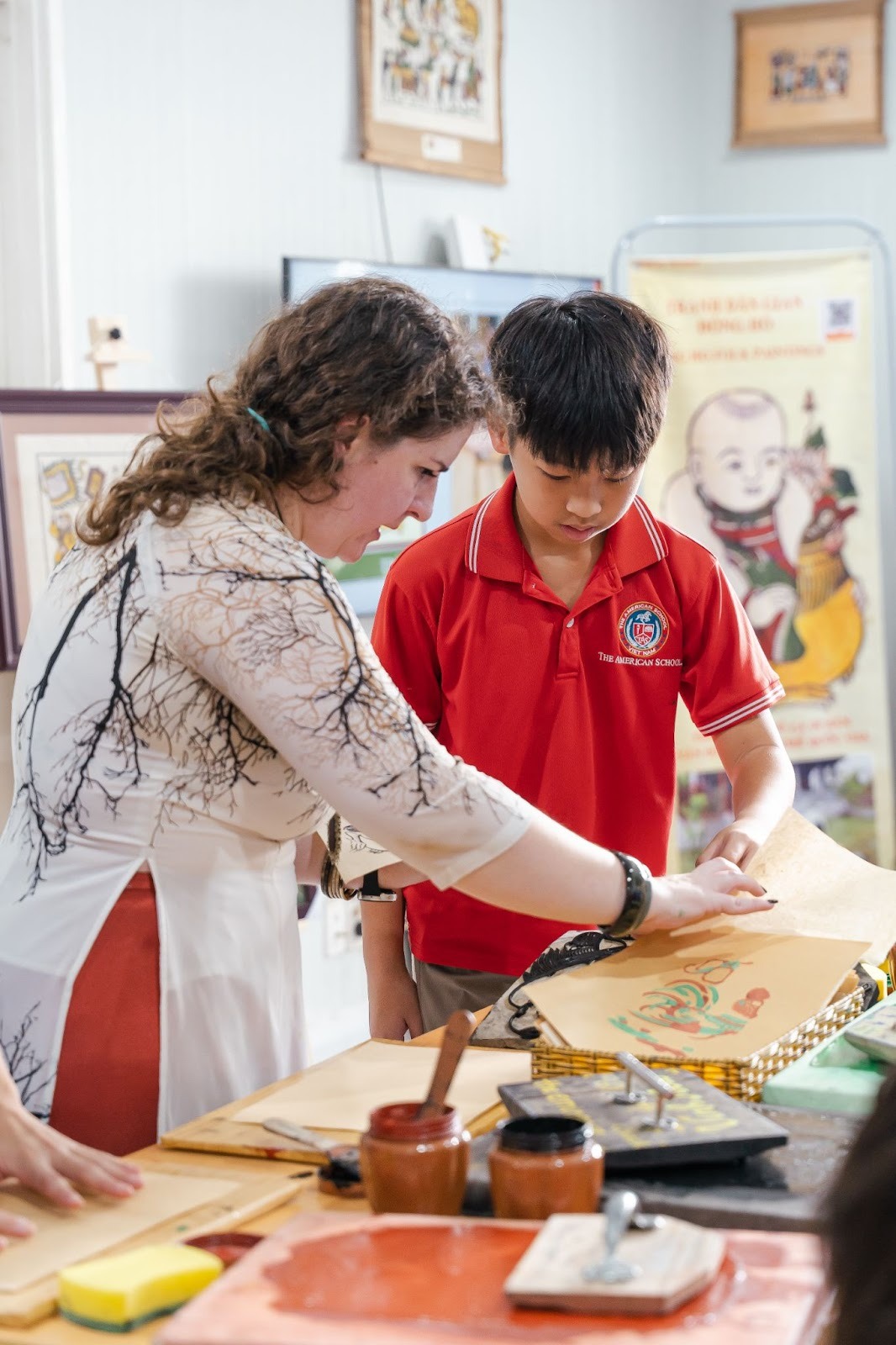
The International Baccalaureate PYP builds a distinctive foundation through three core strengths:
- Inquiry-based thinking: students learn through questions, exploration, experimentation, and reflection not passive, one-way instruction.
- Transdisciplinary thinking: learning is connected systematically so students understand “why” and “how to apply,” rather than memorizing isolated facts.
- Sustainable learning competencies: communication, collaboration, self-management, critical thinking, research, and problem-solving.
A strong PYP foundation enables students to progress to higher grades with genuine academic competence without being limited by short-term, memory-based learning habits.
The TAS Academic Pathway: From IB PYP To AP/IB Options In High School
TAS designs its academic pathway around continuous competency development, with clear choice points aligned to each student’s goals.
Stage 1 | Primary School (PYP)
The priority is building learning foundations: study habits, learning discipline, communication skills, reasoning ability, and growth through feedback. Students learn to ask high-quality questions, present ideas coherently, and develop age-appropriate independent learning capacity.
Stage 2 | Middle School (expansion and strength identification)
This stage generates “real data” about the student: strengths, best-fit domains, and learning preferences. TAS structures academics and student experiences (projects, clubs, and integrated academic-arts-sports opportunities) to help students:
- explore broadly with direction,
- develop secondary-level learning skills,
- build self-management and personal responsibility.
Stage 3 | High School (strong AP delivery and IB DP)
Students move into deeper academic work focused on university preparation. The AP track supports academic development based on strengths; the IB DP direction expands an internationally recognized pathway that is systematic and highly aligned to global university expectations.
AP At TAS: Academic Depth And Flexibility Aligned To Individual Goals
The AP program (Advanced Placement) provides a strong academic track that develops advanced reading and writing, analysis, and evidence-based argumentation. TAS’s strength is implementing AP with a “fit-for-purpose” approach focused on alignment, not volume.
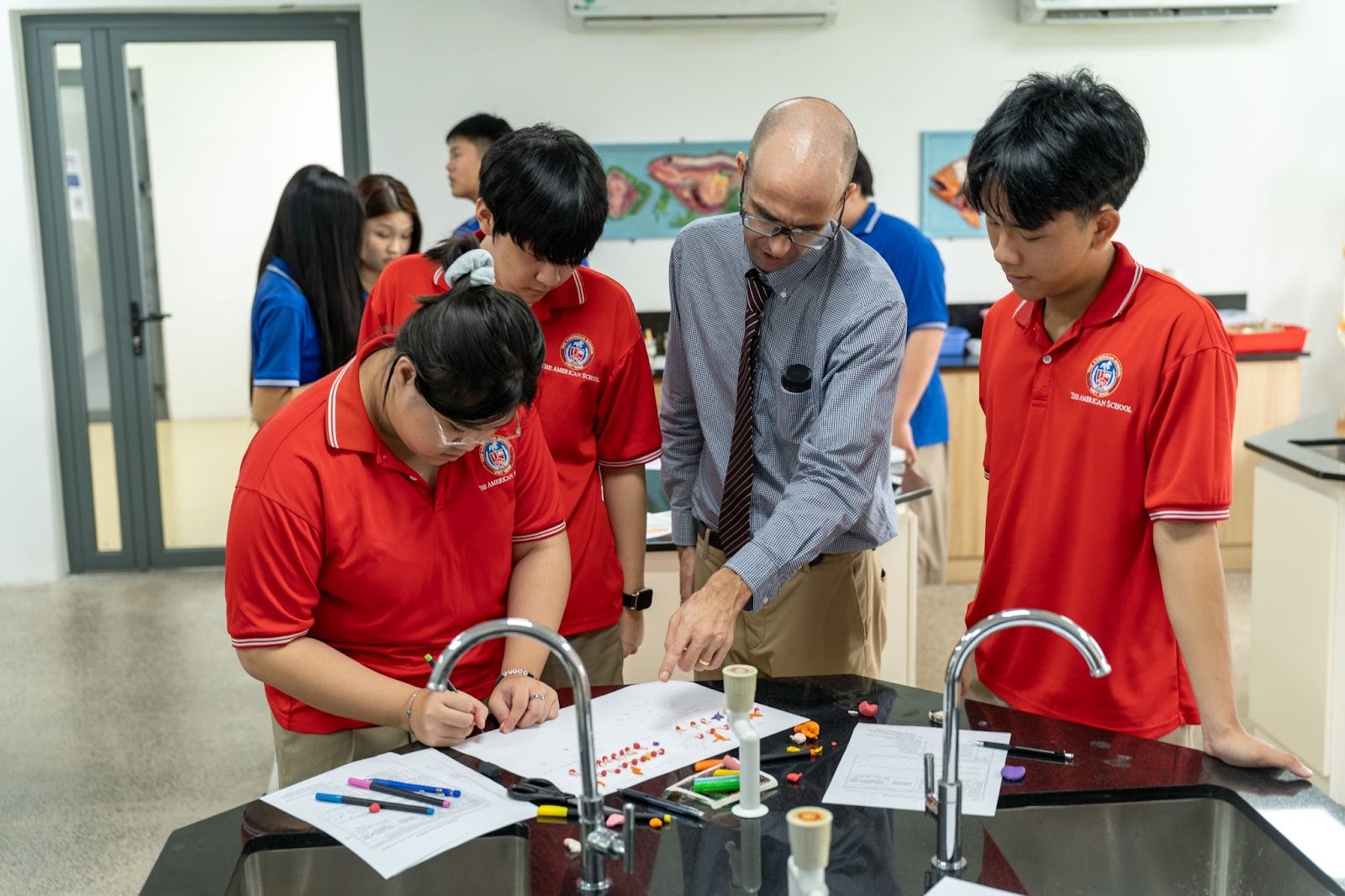
AP offers clear advantages for students who:
- need depth in strength-area subjects,
- want to build a profile aligned to a field cluster (STEM, business, social sciences, humanities, etc.),
- need university-level readiness skills: long-form reading, analytical writing, data-based reasoning.
At TAS, AP functions as an “academic fast track” for students with defined strengths or university goals while maintaining balance with extracurricular involvement and skills development.
Expanding The IB Track In Secondary School: IB DP Direction And Global Alignment
With an IB PYP authorized foundation and demonstrated academic capacity through AP, TAS is expanding its ecosystem of options through an IB DP direction.
The IB Diploma Programme (DP) is distinguished by high expectations for:
- critical thinking and argumentation,
- research and academic writing,
- independent learning and personal responsibility.
Developing an IB DP reflects long-term academic vision: TAS is not offering isolated programs, but building an integrated ecosystem where students can choose pathways that fit their strengths and goals while maintaining consistent international standards throughout.
Choosing The Right Career Path: A Structured TAS Approach That Supports Real Decisions
Choosing the right field should not be driven by intuition alone. Strong decisions come from structured experiences, clear learning evidence, and personalized guidance. TAS builds four layers of support to help students make more accurate choices:
- Domain-based academic exploration: students engage with subject clusters and projects across STEM, business, social sciences, arts, media, and more to identify strengths.
- A clear competency profile: academic results, project outputs, skills, and learning attitudes are tracked over time so students understand where they are and how they are developing.
- Academic pathway planning aligned to university goals: students receive guidance on course selection (AP/IB), activities, and personal projects aligned to intended field clusters.
- Real-world experiences: clubs, community projects, and academic enrichment allow students to “try before choosing,” reducing the risk of misalignment due to limited exposure.

The intended outcome is a well-supported choice with a clear basis: appropriate capability, strong motivation, and an academic pathway that matches long-term direction.
Teaching Quality At TAS: From Real Classroom Practice To Quality Assurance Systems
An IB World School is not proven by slogans. Quality is demonstrated in daily instruction and in how academic standards are monitored and improved.
TAS focuses on:
- Teacher professional growth: training, standardized planning, Professional Learning Communities (PLCs), classroom observation, and instructional feedback cycles.
- Competency-based instruction: students must be able to explain reasoning, present thinking processes, critique ideas, and revise based on feedback.
- Assessment for progress: assessment is not only for grading it is used for ongoing feedback and improvement; parents see growth through learning evidence.
- A serious academic culture: study discipline, academic integrity, and academic communication standards are positioned as core expectations.
For more information:


-min.jpg)

.avif)